Short answer: A magnetic boiler filter is a canister on the heating pipe returning to your boiler. A strong magnet inside catches black iron sludge, called magnetite, before it can damage the pump or heat exchanger. Clean it at least once a year, usually at the service. Some warranties depend on it, including Baxi's 800 range.
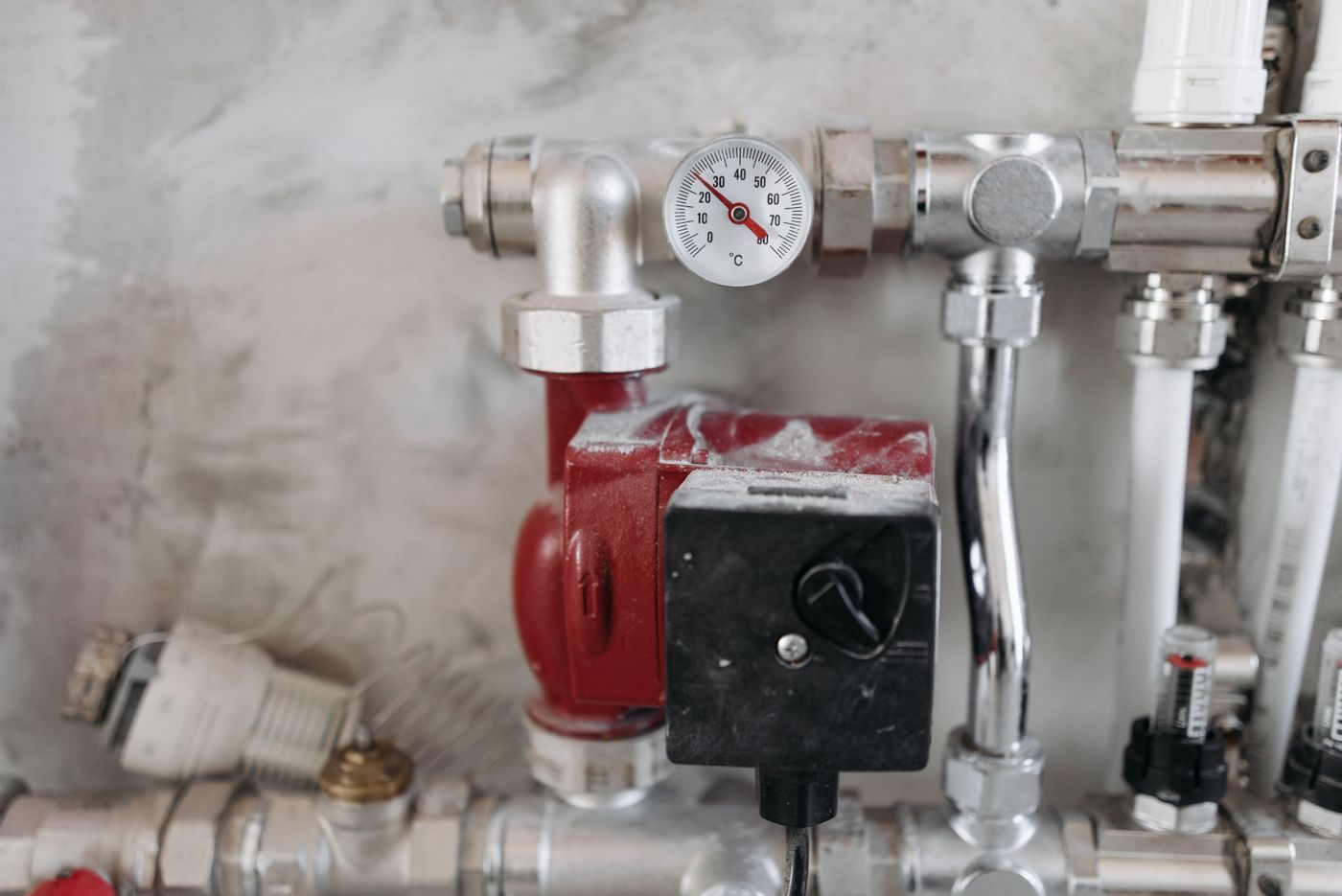
Most new boilers fitted in recent years come with a magnetic filter. Many older systems have had one added. It is a small part that does an important job, but only if someone cleans it.
Where the sludge comes from
Most heating systems combine steel radiators with copper pipes. Oxygen in the water slowly rusts the inside of the radiators. That rust becomes a fine black powder, magnetite. It settles at the bottom of radiators and gets carried round to the boiler.
In the boiler, magnetite can:
- Clog the heat exchanger, causing overheating and kettling
- Wear the pump
- Block valves and sensors
- Reduce efficiency
How the filter works
The filter is a canister on the return pipe, the pipe bringing water back to the boiler. Water flows past a strong magnet that grabs magnetite. Some filters also have a mesh or chamber that catches non magnetic debris. Clean water carries on to the boiler.
The filter does not remove sludge already sitting in radiators. It stops what is circulating from reaching the boiler.
How often to clean it
At least once a year, usually at the service. After a system clean or power flush, the filter may fill quickly at first and need cleaning again within weeks or months. Follow the filter maker’s guidance.
| Situation | Suggested cleaning |
|---|---|
| Normal system | Yearly, at the service |
| After a chemical clean or power flush | Again soon after, then yearly |
| Heavy sludge found | More often until it settles |
How it is cleaned
- The isolating valves on the filter are closed.
- Pressure is released through a vent.
- The cap is removed and the magnet taken out.
- Sludge is wiped off and the canister rinsed.
- Everything goes back and valves are opened.
- The system is topped up to the right pressure and bled of air.
- Inhibitor is added through the filter if the level is low.
What comes out tells a story. A thin film is normal. A thick black coating means the system is rusting faster and may need more attention.
Filters and warranties
Some boiler makers tie their longer warranties to a filter.
- Baxi. The Baxi 800 range 10 year warranty is subject to registration within 30 days, the Benchmark checklist being completed, an annual service, and the supplied magnetic filter being fitted and maintained for the length of the warranty.
- Vaillant. Vaillant offers a longer guarantee on some boilers when a Vaillant filter is fitted and the boiler is registered by one of its registered installers. Check your certificate.
If your guarantee mentions a filter, ask for the filter clean to be written on your service record. Our post on the Baxi boiler service and filter rule goes into more detail.
Greenwich and newer installs
In Greenwich and Charlton, many period houses have had new boilers fitted in recent years, often Baxi, Worcester Bosch or Vaillant, with a filter supplied. If your boiler is under one of these warranties, the filter clean is part of keeping it valid. Older parts of the same systems, such as decades old radiators, can still produce plenty of sludge. Our Greenwich area page covers the housing there.
Inhibitor
Inhibitor is a chemical added to heating water to slow rust. It wears out over time and gets diluted whenever the system is topped up or drained. At a service, the engineer can test the level and add more. After any work that drains the system, such as moving a radiator, inhibitor should be topped up.
Signs your filter needs attention
- It has not been cleaned in over a year
- Radiators are cold at the bottom
- The boiler is noisier than it was
- You have had a pump or heat exchanger fault before
- Water from bleed valves is dark
Do I need one?
If you do not have a filter and your system has steel radiators, fitting one is often worthwhile, especially in older London houses with open vented systems. It is common practice to fit one with a new boiler, and some warranties require it.
Filter types you may find
Several makers produce magnetic filters, and they look different. Some are clear, so you can see the sludge. Others are solid plastic or metal. Most fit on the return pipe under the boiler, but some are fitted elsewhere on the system, such as in an airing cupboard. If you are not sure whether you have one, take a photo of the pipes under the boiler when booking.
Booking
A filter clean is usually done alongside a service. See our magnetic filter clean and system health check page. If your radiators have heavy sludge, the health check helps decide between a chemical clean and a power flush.
Gas work in the UK must be done by a Gas Safe registered engineer. Check the ID card and the Gas Safe Register.
Quick questions
Where is my magnetic filter?
Usually on the pipe under the boiler, a round canister with a cap, often with the maker's name on it.
Can I clean it myself?
Some filter makers publish homeowner steps. You must isolate it correctly and repressurise afterwards. If unsure, leave it for the service.
Does a filter remove limescale?
No. It catches magnetic sludge in the heating water. Limescale needs a scale reducer on the cold supply.
Last updated 23 October 2026. Written for homes in London. Rules can change, so check the linked sources for the latest position.