Short answer: A system boiler service covers the standard gas, burner, flue and combustion checks, plus the built in pump and expansion vessel, the motorised valves and the cylinder thermostat. If the cylinder is unvented, its safety devices are checked to the maker's instructions: the pressure relief valve, temperature and pressure relief valve, expansion vessel and discharge pipe.
Ealing was nicknamed the Queen of the Suburbs, and its Edwardian family houses are still some of the most common homes in W5 and W13. Many have had their heating modernised to a system boiler with an unvented cylinder. It gives strong hot water to more than one bathroom, without tanks in the loft.
How a system boiler works
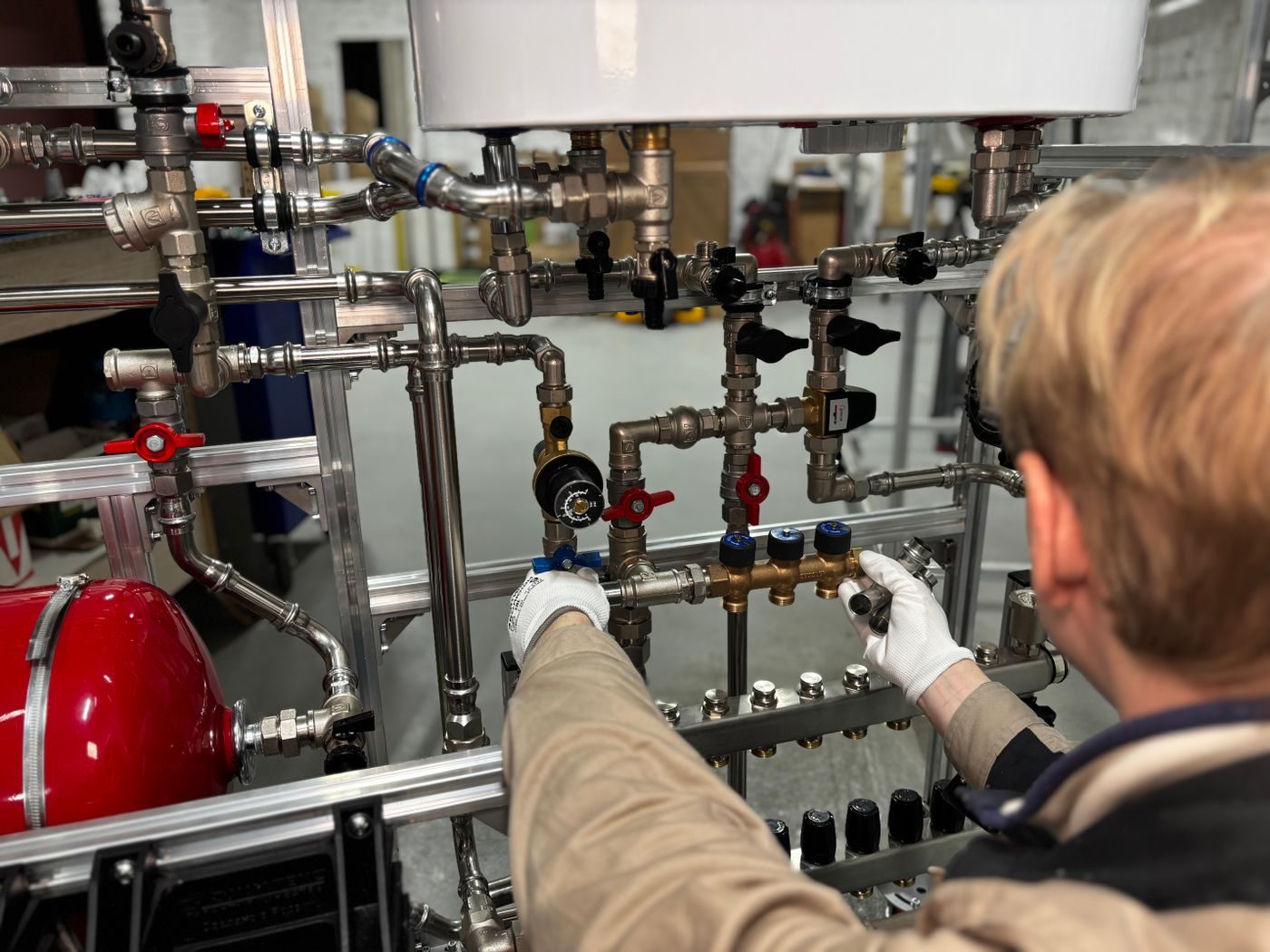
A system boiler heats water for radiators and a hot water cylinder. Unlike a regular boiler, it has the pump and an expansion vessel built in, so the heating is sealed and pressurised. There is no small feed and expansion tank in the loft.
The cylinder can be:
- Vented. Fed from a cold water tank in the loft. Lower pressure.
- Unvented. Fed straight from the mains, sealed and under pressure. Stronger showers.
What the service covers
The boiler
| Check | Why |
|---|---|
| Gas supply pressure | Correct burning |
| Burner and heat exchanger | Clean and working |
| Seals, electrodes, fan | Catch wear |
| Condensate trap | Clean, to prevent lockouts |
| Flue and terminal | Safe removal of fumes |
| Combustion test | Measure what the boiler is burning |
The sealed heating side
The system pressure gauge should read what the maker sets when cold, often around 1 to 1.5 bar, but check your manual. The engineer checks:
- The built in expansion vessel charge. A flat vessel causes pressure to rise when hot and drop when cold.
- The pressure relief valve. It lets water out if the heating pressure gets too high.
- The pump.
Controls
Motorised valves that switch between heating and hot water are checked, along with the cylinder thermostat, room thermostat and timer.
Unvented cylinder checks
Unvented cylinders hold hot water at mains pressure. They have safety devices that stop the cylinder over pressurising or overheating. Cylinder makers usually ask for these to be checked regularly, typically yearly, by someone competent in unvented hot water systems.
| Part | What it does |
|---|---|
| Pressure reducing valve | Keeps incoming mains pressure at a safe level |
| Expansion relief valve | Releases water if pressure gets too high |
| Temperature and pressure relief valve | Releases water if the cylinder gets too hot or too pressurised |
| Expansion vessel or air bubble | Takes up the expansion of heated water |
| Tundish and discharge pipe | Lets you see a discharge, and carries water safely outside |
If the tundish drips, a valve may be letting by or the expansion vessel may have lost its charge. That needs checking.
Ask for the unvented checks when you book, so an engineer competent in unvented systems is sent and the time is planned in.
Ealing houses
Ealing’s Edwardian houses often have airing cupboards on the first floor landing, which suits a cylinder. Many have had loft conversions, which sometimes moved the cylinder or added a bathroom. Our Ealing area page covers the housing, including the Brentham Garden Suburb conservation area, where outside changes like moving a flue may need consent.
Hard water and cylinders
Ealing is supplied by Thames Water, which says all the water in its region is hard. Scale builds up on the coil inside the cylinder and in the valves. Some unvented cylinders have scale protection on the incoming water. A cylinder that takes much longer to heat than it used to may have a scaled coil.
Sludge
Sealed systems take in less fresh water than open vented ones, but they still produce sludge, especially if the system has been drained and refilled during building work. A magnetic filter on the return to the boiler helps. Clean it at the service. Our magnetic filter clean page explains more.
Common faults
| Symptom | Possible cause |
|---|---|
| Pressure rises when hot, drops when cold | Flat expansion vessel |
| Pressure keeps dropping | Leak or pressure relief valve letting by |
| Hot water but no heating | Motorised valve sticking |
| Tundish dripping | Cylinder valve or vessel problem |
| Slow hot water recovery | Scaled coil or thermostat fault |
See our post on boiler pressure keeps dropping for more on pressure faults.
Warranties
Most boiler makers ask for a yearly service to keep the guarantee valid. Cylinder makers often have their own conditions about yearly checks on unvented safety devices. Check both sets of paperwork.
During the visit
The boiler and hot water are off for part of the visit, and some cylinder checks need the hot water supply isolated for a short time. Plan showers before the engineer arrives.
Booking
When you book a system and regular boiler service, tell us:
- Boiler make and model
- Whether the cylinder is vented or unvented, if you know
- Where the boiler and cylinder are
- Any problems, such as a dripping tundish or pressure changes
Gas work in the UK must be done by a Gas Safe registered engineer. Ask to see the ID card and check it on the Gas Safe Register.
Quick questions
What is the difference between a system and a regular boiler?
A system boiler has the pump and expansion vessel built in, so it does not need a feed and expansion tank in the loft. Both heat a hot water cylinder.
What is a tundish?
A small open fitting on the discharge pipe from an unvented cylinder's safety valves. It lets you see if water is being released.
My tundish is dripping. What should I do?
Book a check soon. It can mean a safety valve is letting by or the expansion vessel needs attention.
Last updated 23 October 2026. Written for homes in London. Rules can change, so check the linked sources for the latest position.